The Trades Retirement Cliff: What the Labor Shortage in Construction Industry Means for Your Next Projects
Every general contractor and developer working in Massachusetts right now is feeling some version of the same problem: crews are harder to book, harder to keep, and harder to replace once they retire. The labor shortage in construction industry conversations aren't new, but the numbers behind it in 2025 and 2026 point to something more structural than a temporary crunch, and it is already changing how realistic a project schedule can look across the state.
The Retirement Numbers Behind the Trend
According to Joe Landers of the Home Builders and Remodelers Association of Massachusetts, speaking to the Boston Globe on September 10, 2025, for every five people who retire from construction jobs, only two new workers join the field. Landers also put a number on where that trend is headed: by 2030, an estimated 70% of the current labor force is expected to have retired.
This is a retirement cliff, and it is a big part of why the labor shortage in construction industry data keeps getting worse instead of leveling off. National figures back up the local story. The Associated General Contractors of America has identified construction workforce shortages as a leading cause of project delays nationwide, a pressure made sharper by tighter immigration enforcement pulling experienced crews out of active jobs mid-project.
Why Crew Availability Is Now the Binding Constraint
For years, the biggest variable in a Massachusetts construction schedule was material cost or permitting timelines. The labor shortage in construction industry trends now underway is changing that. When there simply are not enough trained framers, siders, roofers, and deck crews to go around, price stops being the thing that sets your start date, availability does.
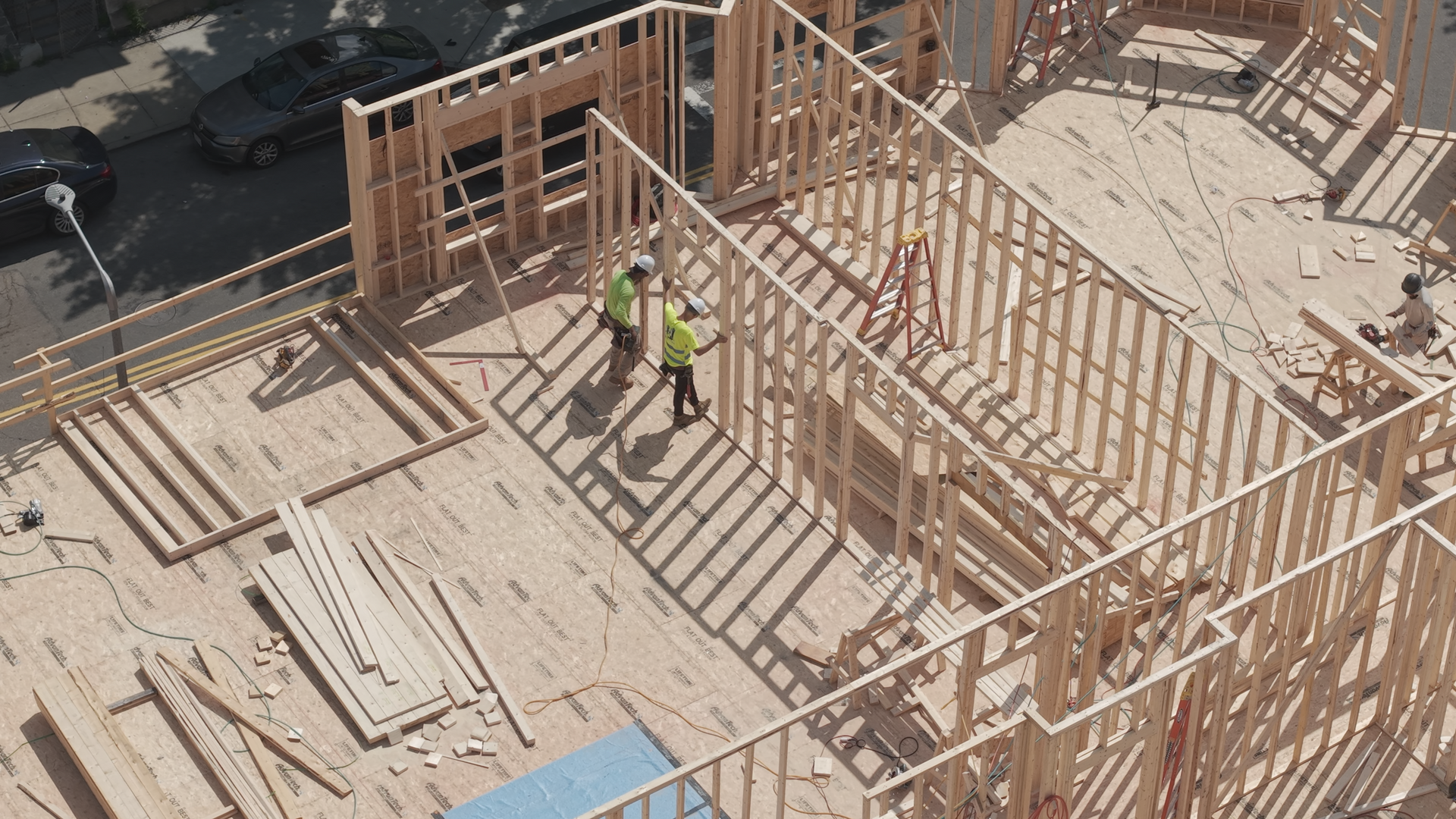
Framing, siding, roofing, and decking crews typically have a window of roughly six months to get a structure weather-tight before hard winter sets in. Lose two or three weeks to a subcontractor that cannot staff up, and you are not just late. You are pushing interior work, and sometimes the whole project, into the following spring.
This is where labor in construction stops being an abstract industry trend and starts showing up as a line item on your schedule. A GC juggling three or four separate envelope subs is juggling three or four separate points where a thin crew can stall the job.
What Crew Shortages Change About Evaluating a Subcontractor
If you are vetting a framing, siding, roofing, or decking partner for a multifamily, commercial, or mixed-use project right now, the questions worth asking have shifted. It is less about whether a company can do the work, and more about whether it can staff the work, on your timeline, without borrowing crews it does not fully control.
Worth asking directly:
- Are these employees, or subcontracted labor brought in project by project?
- What does crew turnover look like year over year?
- Are workers trained and currently certified, or is training treated as a one-time box to check?
- Who shows up if the lead crew gets pulled onto a bigger job mid-project?
The construction worker shortage is not just a hiring problem for the sub you are evaluating. If a company is thin on staff, that becomes your risk the moment your schedule depends on it.
Where the Next Generation of Construction Jobs Isn't Showing Up
Part of what makes this retirement wave different is the pipeline behind it. The construction jobs that used to reliably pull in the next generation of framers and roofers are not attracting workers anywhere near the rate the state needs. Apprenticeship enrollment, trade school pipelines, and crew-to-crew word of mouth all matter here, and none of them are currently closing a five-to-two retirement ratio on their own.
For a GC or developer, that means the subcontractors still investing in training, certification, and stable in-house crews right now are the ones most likely to still be fully staffed two or three years from now, and the ones worth building a longer relationship with today. Firms that treat the labor shortage in construction industry pressures as a reason to invest in people, rather than cut corners on training, tend to be the ones still delivering on schedule when competitors cannot.
How Lifetime Contractors Keeps Crews on the Job
Rather than brokering framing, siding, roofing, and decking out to whichever crew happens to be available that month, Lifetime fields its own committed, in-house teams: professionals who are vetted, trained, and kept current on OSHA 10 and OSHA 30 safety certifications as standard practice.
For a GC or developer working with Lifetime Contractors, that translates into something simple. There is no scrambling to find a replacement crew mid-project, no unexplained gaps in the schedule, and no quality slipping because a stretched-thin sub pulled its best people onto a bigger job. Whether the scope is framing on its own, decking, roofing, siding, or the full Weather Tight Package covering all four together, clients get the same trained, ethical, dependable team showing up and staying on the job, without the disruptions that a thinning trades workforce is causing elsewhere in Massachusetts.
The Bottom Line for Your Next Project
The labor shortage in construction industry trend is not reversing before the 2030 mark that HBRAMA and the Boston Globe pointed to. For Massachusetts GCs and developers planning multifamily, commercial, or mixed-use work over the next few years, the safer bet is partnering with envelope contractors who have already solved the staffing problem, not ones still hoping to.