Construction in the United States: The evolution of wood framing and insulation
Wood framing has shaped how America builds homes for more than two centuries, and it continues to define residential construction across the country today. From early colonial settlements to modern suburban developments, wood framing remains the structural backbone of most single-family houses in the United States.
While the core concept of wood framing has remained consistent, the materials, techniques, and performance expectations have evolved significantly over time. At the same time, insulation has completely transformed how wood framing performs, turning basic structural systems into highly efficient building envelopes designed for comfort, durability, and energy savings.
In this article, we’ll explore:
- How wood framing developed in the United States
- How insulation reshaped residential construction
- Why wood framing continues to dominate the American housing market
The early foundations of wood framing in America
In the 1700s and early 1800s, homes in the United States were built using heavy timber framing, a labor-intensive method that relied on large wooden beams and complex joinery techniques. Builders crafted mortise-and-tenon joints by hand, which required skill, time, and considerable effort to assemble properly.
Although heavy timber framing created durable structures, it demanded specialized craftsmanship and was not easily scalable as the population grew and communities expanded westward. As settlers moved across the country during the 19th century, there was a growing need for faster and more affordable construction methods that could keep pace with rapid development.
That demand led to the rise of balloon framing, a revolutionary advancement in wood framing that replaced massive beams with lighter dimensional lumber. Instead of intricate joinery, builders used mass-produced nails to fasten framing members together, dramatically speeding up the construction process.
Balloon wood framing allowed long vertical studs to run continuously from the foundation to the roofline, which simplified assembly and reduced labor costs. This innovation made wood framing more accessible and helped fuel the expansion of cities and emerging suburban neighborhoods throughout the country.
The transition to platform wood framing
Although balloon framing played a significant role in American construction, it gradually gave way to platform framing in the early 20th century. Platform wood framing, which remains the standard system used in the United States today, introduced a safer and more efficient way to build multi-story homes.
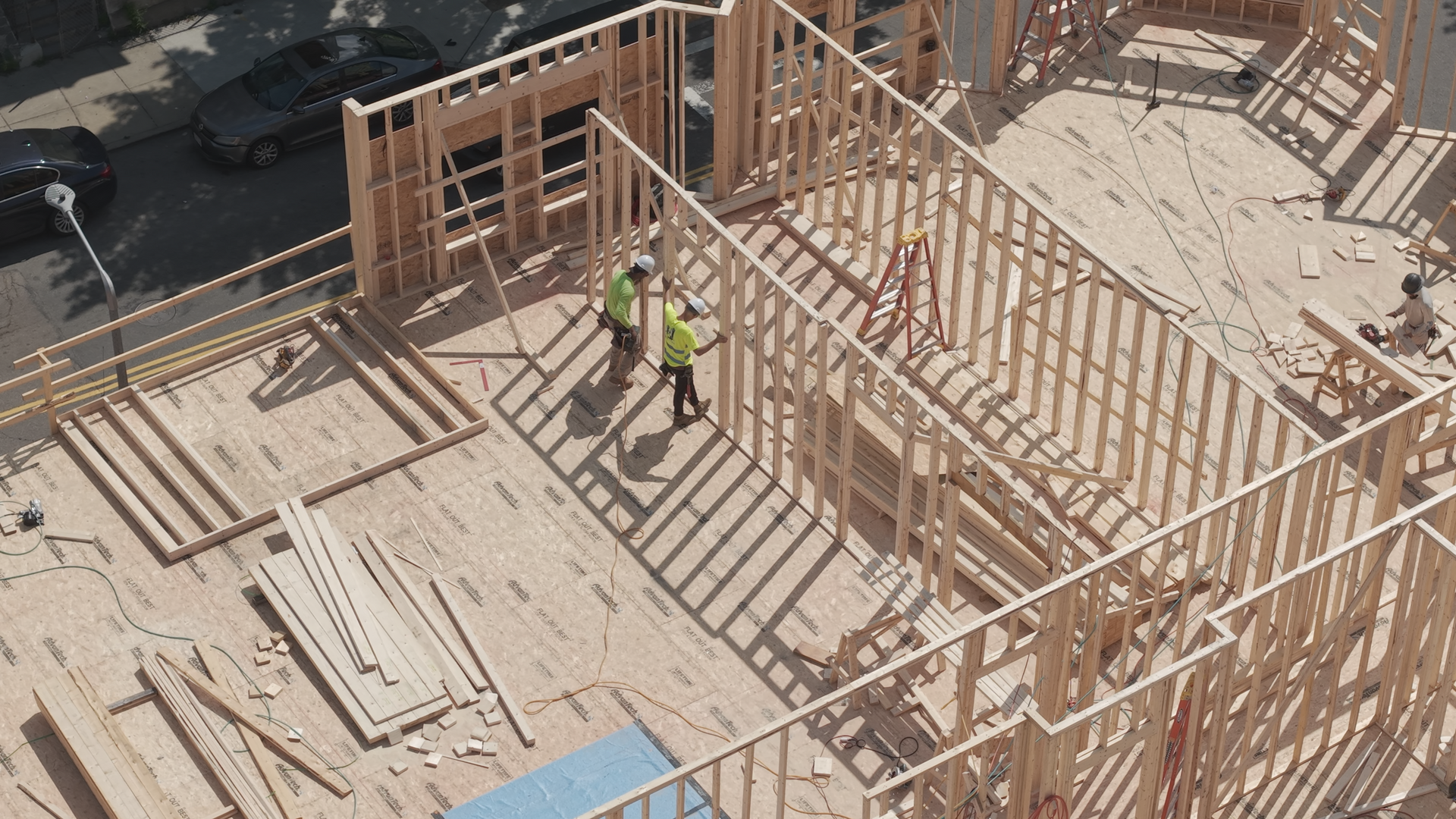
Instead of running studs continuously through multiple floors, platform wood framing constructs each level independently, creating a solid floor platform before framing the next story above it. This method improves fire safety, simplifies the installation of plumbing and electrical systems, and enhances overall structural stability.
Platform wood framing also reduces material waste and allows crews to work more efficiently, since each level provides a stable working surface for the next stage of construction. Over time, this approach became the preferred method for residential building and remains dominant across the country.
Today, when most people refer to wood framing in residential construction, they are describing the platform framing system that defines modern American homebuilding.
How insulation transformed construction
In the early days of American construction, wood framing provided structure but offered limited thermal performance, as insulation was minimal or nonexistent. Homes relied heavily on fireplaces, wood stoves, and thick wall assemblies to maintain indoor comfort, particularly in colder climates.
As building science advanced in the mid-20th century, insulation became an essential component of wood framing systems rather than an afterthought. The widespread adoption of fiberglass batt insulation allowed builders to install thermal protection directly between wall studs, significantly improving energy efficiency.
Over time, insulation materials expanded beyond fiberglass to include blown-in cellulose, spray foam insulation, rigid foam board, and mineral wool products. Each of these insulation systems enhanced the performance of wood framing by improving temperature control, reducing air leakage, and increasing overall comfort.
Modern wood framing no longer functions solely as structural support; it works in coordination with insulation, air barriers, and moisture management systems to create a complete building envelope. In many states, building codes now require specific insulation values within wood framing assemblies to meet energy efficiency standards.
Wood framing and energy performance
One of the primary reasons wood framing continues to dominate residential construction in the United States is its compatibility with modern insulation strategies. Wood naturally offers better thermal performance than materials like steel, which makes wood framing assemblies easier to insulate effectively.
When wood framing is combined with properly installed insulation and air sealing techniques, homeowners benefit from lower utility bills and more consistent indoor temperatures year-round. Advanced framing methods, sometimes referred to as optimum value engineering, reduce unnecessary lumber and increase cavity space for insulation.
This approach improves energy performance without compromising structural integrity, which makes wood framing both efficient and practical. In addition, continuous exterior insulation can be applied over wood framing to reduce thermal bridging and further enhance overall performance.
These improvements allow wood framing systems to meet today’s increasingly strict energy codes while remaining cost-effective and widely accessible.
Why wood framing continues to lead the market
Despite the availability of alternative building systems such as steel and concrete, wood framing remains the preferred method for most residential projects in the United States. The reasons are practical and consistent across regions.
Wood framing materials are widely available and competitively priced, which helps control construction budgets without sacrificing structural integrity. Construction crews are extensively trained in wood framing techniques, which supports faster build times and predictable project schedules.
In addition, wood framing integrates seamlessly with modern insulation systems, making it easier to achieve energy efficiency targets required by today’s building codes. Responsibly sourced wood also supports sustainability efforts, since it is renewable and stores carbon throughout its lifecycle.
Wood framing and insulation as a unified system
It is important to recognize that wood framing and insulation should never be treated as separate decisions during construction. Instead, they function as interconnected components of a larger system designed to manage structure, energy performance, and moisture control.
Properly installed insulation within wood framing cavities improves comfort, reduces drafts, and minimizes condensation risks that can lead to mold or structural deterioration. When wood framing remains dry and protected through effective moisture management, the long-term durability of the structure significantly improves.
How Lifetime Contractors approaches wood framing
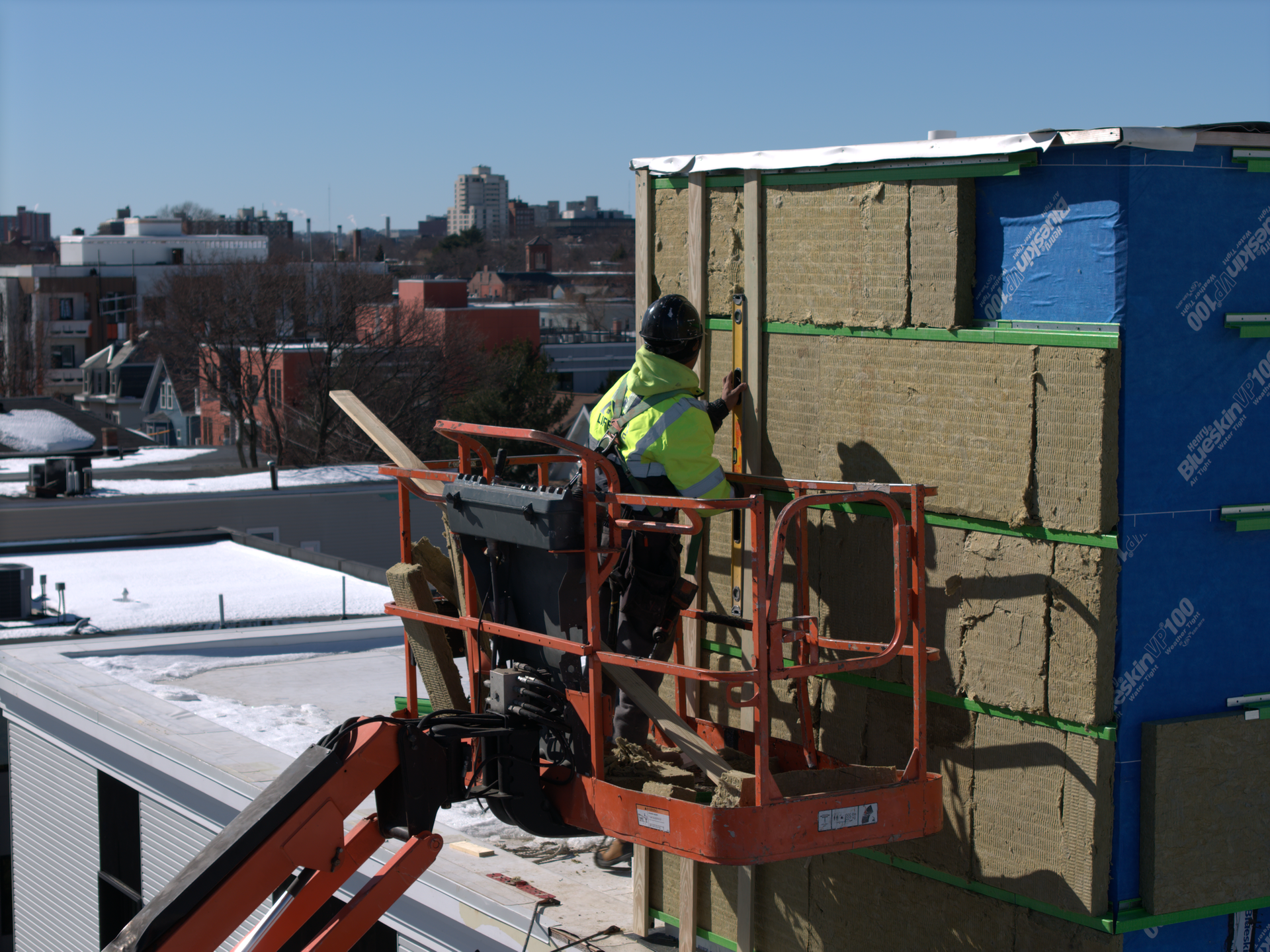
At Lifetime Contractors, wood framing is approached with a comprehensive understanding of how structure, insulation, and exterior systems work together. Our team plans each project with careful attention to load distribution, code compliance, safety standards, and energy performance requirements, supported by OSHA 10 and OSHA 30 certified professionals on-site.
We ensure that insulation is properly installed within wood framing assemblies to support comfort and efficiency from the beginning of construction. By coordinating framing, insulation, and moisture control strategies early in the process, we help create homes that perform reliably for years to come.
Whether working on new construction or renovation projects, our focus remains on delivering wood framing systems that are structurally sound, energy-efficient, and built to last. Our safety-first culture, reinforced through OSHA training and field experience, guides how projects are planned, executed, and supervised every day.
For anyone planning a new build or renovation, understanding how wood framing and insulation work together is essential to building smarter and achieving long-term value. Reach out to learn how we can help you.